How long does it take to learn tai chi?
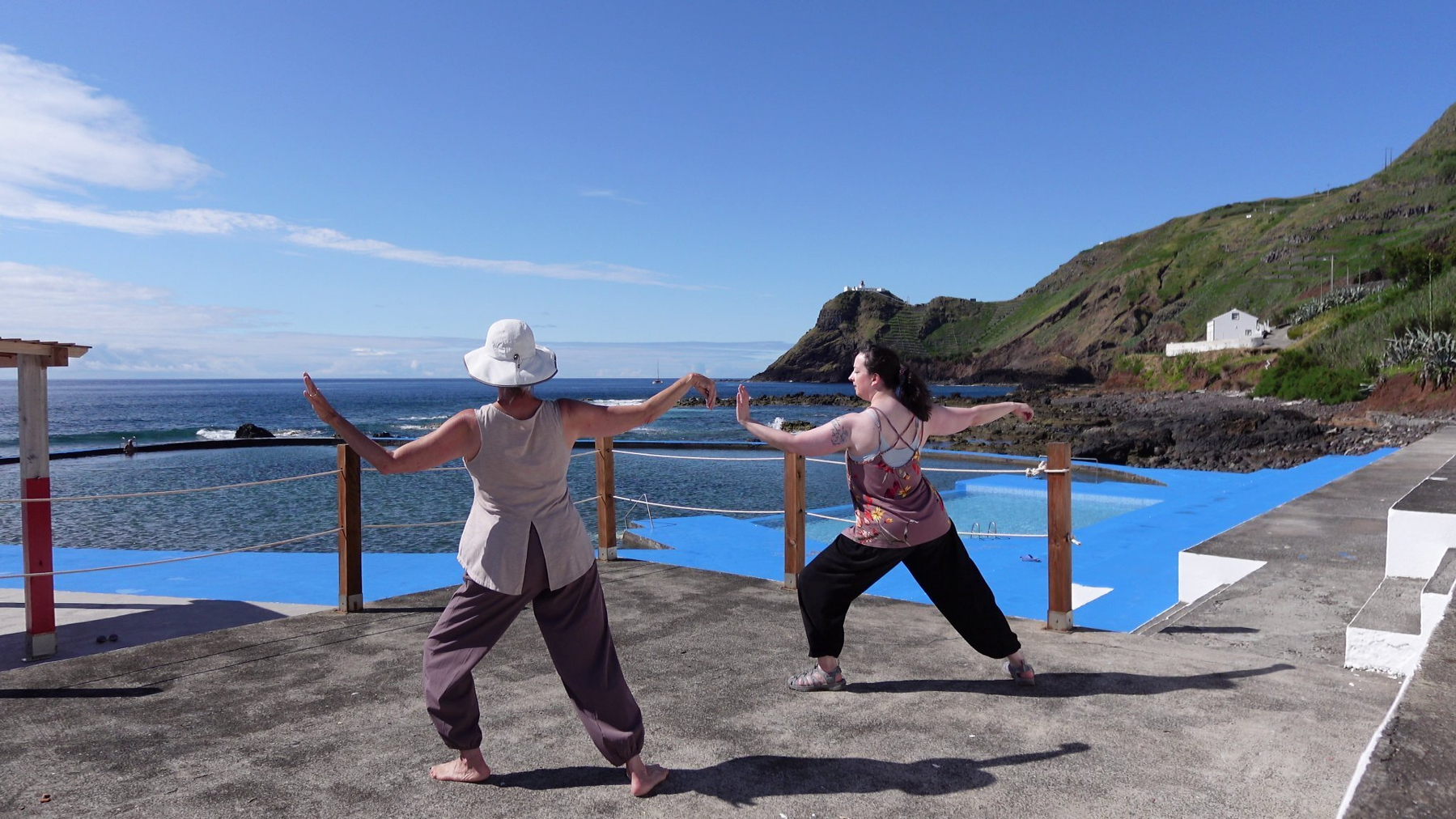
One common question I’ve been asked is “how long does it take to learn tai chi?” It’s usually asked in some fashion after the first couple of classes when each posture is still as opaque as it was the first class they attended. My reply is often some variation of “Don’t worry about it” and “Practice everyday if you can, even just a few minutes will help” or even “a lifetime.” But I think that leaves some students unsatisfied, expecting that one hour a week will add up to them learning the form, or just a section of it, in a few months. For most people, that is not the case. But there is a strong tie between how often you practice and how long it takes.
The good news first: you don’t need to learn the whole form to benefit from tai chi.
Most research trials for tai chi use roughly hour-long classes one to four times a week for at least three months as a baseline. For example 2018 fibromyalgia study in the BMJ and 2024 blood pressure trial in JAMA Network Open. In the fibromyalgia trial, 24 weeks of practice beat 12 weeks, but twice a week didn’t beat once a week. It seems that health benefits come from sticking with a tai chi practice over months. So if you come to class once a week and keep coming back, you’re on the right track.
Learning the form, especially a long posture set like the Yang Style long form, is a different story that requires consistency of practice over a dedicated period of time. You can adjust the time you spend for your personal goals. Learning takes real effort, but you get to set the pace. Below I use the 108-posture Yang Style long form as my example, which is the longest case. Shorter forms take less time.
I tend to group meaningful practice into three buckets. The entry level practice, the solid practice, and the full practice. This is by no means a definitive guide and is for illustration purposes to answer the question. Because to answer the beginning question of “How long to learn?” I need to define what I mean by a practice.
And if even the entry level feels like a lot right now, start smaller. A few minutes of practice every day still counts, and it’s a great way to begin.
Entry level practice: 45 - 60 minutes
The entry level practice is a wonderful spot for those who just want to enjoy tai chi and gain health benefits from consistent effort.
Aim for the following
One to two times a week either an in person class or the following:
- 10 minutes of gentle stretching.
- 10 minutes of standing meditation. Begin at 2 to 3 minutes and increase gradually.
- 10 minutes of basic exercises like tai chi walking or a posture drill.
- 15 to 30 minutes of form practice. Run through the set you know, watching a video and following along is fine. If you only know a short section, repeat until you’ve practiced for time allotment.
The solid practice: 75 - 90 minutes
The solid practice begins solidifying a tai chi personal practice. At this level memorizing a form or two is easier as well as incorporating tai chi principles.
Aim for the following
Two to four times a week either an in person class or the following:
- 15 minutes of gentle stretching.
- (optional) Run through a supporting* Qi Gong set.
- 15 minutes of standing meditation. Begin at 2 to 3 minutes and increase gradually.
- 15 minutes of basic exercises and drills focusing on tai chi principles.
- 30 to 45 minutes of form practice. Run through the set you know, watching a video and following along is fine but the aim is to do it from memory.
The full practice: 2 to 3 hours
“Men and women, young and old, if they train morning and evening, through hot and cold, without breaks and exceptions, will be successful. Indeed, the ancients said that it is ‘wiser to practice than to ponder,’ and learners of taijiquan, men and women, young and old, will get the best possible results if they keep at it all the year round.” Yang Chengfu from “The Practice of Taijiquan” translated by Sam Masich
As you can see from the above quote, the traditional expectation was two practice sessions daily for a serious student. In Taijiquan Theory by Dr. Yang Jwing-Ming he describes the full form performed three times per session and basic exercises. My lineage also adds in daily standing meditation practice. There are those out there who do practice that amount, and their skill shows from that dedication. However, if you are practicing tai chi for other purposes, there is no need to go to such extremes.
The full practice is a complete tai chi personal practice. At this level memorizing several forms is feasible. Advanced tai chi practices can be developed. At this level splitting the practice into two shorter sessions may be easier to fit in.
Aim for the following
Three to six times a week either an in person class or the following:
- 20 minutes or more for a full tai chi warmup.
- (optional) Run through a supporting* Qi Gong set.
- 15 to 60 minutes of standing meditation. Increase time spent in standing meditation gradually.
- 30 to 40 minutes of exercises and drills incorporating tai chi principles.
- 45 to 60 minutes of form practice. Run through the set(s) you know until you’ve practiced for the time allotment.
So how long to learn then?
First, as mentioned above, I’m using the Yang Style long form, 108-posture set as an example. Time will be reduced the shorter the form is. Second, this is the time to learn and memorize the sequence and perform it at a beginner level, depending on the student’s aptitude and previous experience in tai chi or other Martial Arts. I’d expect a student at the entry level to learn it in one to two years. The solid level eight to twelve months. And lastly, the full practice level four to nine months. These are rough estimates and depend heavily on the individual student and teacher.
Health benefits seem to come from sticking with tai chi over months. Learning the form depends much more on how often you practice and the quality of the practice.
Supporting* Qi Gong set: I often recommend the Eight Silk Brocades or a Muscle and Tendon Changing set
 Loura